

Artificial Intelligence & Machine Learning
CIP Code: 11.0102
Overview
Embark on a career in AI, where technologies like Large Language Models (LLMs), Generative AI and Machine Learning are transforming industries. These advancements automate tasks, improve decision-making, and drive innovation.
The Lambton College Artificial Intelligence and Machine Learning Ontario College Graduate Certificate program offers an immersive education in cutting-edge AI technologies, including Large Language Models (LLMs), Generative AI, Agentic AI, Machine Learning, Deep Learning, and Reinforcement Learning. Designed to address the critical shortage of skilled AI professionals, this program equips students to tackle complex business challenges such as advanced trend analysis, business intelligence generation, digital automation, and intelligent manufacturing.
The curriculum emphasizes the development of AI and ML models to identify patterns, provide actionable insights, and automate tasks. Students engage in designing and implementing AI systems tailored to organizational needs in manufacturing and automation. Recognizing the importance of effective communication in AI projects, the program also focuses on applied project management skills, enabling students to convey technical information and recommendations to diverse stakeholders clearly and persuasively.
By integrating theoretical knowledge with practical application, the program prepares graduates to lead and innovate in the rapidly evolving AI landscape, meeting the growing demand for AI expertise across industries.
Admission Requirements
- A university degree
The admissions process is competitive and meeting the minimum academic requirements does not guarantee admission.
English Language Requirements
International applicants must demonstrate their knowledge and skills in English by submitting an English proficiency test. Please refer to our English Language Requirements webpage to determine which minimum scores are accepted.
Industry Partnership
We are actively pursuing associations with the following esteemed industry-based programs
University and College-based community groups for students interested in Google developer technologies. These clubs provide a platform for students to grow their knowledge in a peer-to-peer learning environment and build solutions for local businesses and communities.
Provides free digital learning resources focused on underrepresented communities in technology. The program offers over 1,000 courses in areas such as artificial intelligence, cybersecurity, data analysis, and cloud computing. Participants can earn IBM-branded digital credentials recognized in the industry, enhancing their employability in the tech sector.
Offers higher education institutions a complimentary, ready-to- teach cloud computing curriculum. This program equips students with the skills necessary to pursue industry-recognized certifications and in-demand cloud roles. Educators receive professional development and mentorship, ensuring they stay abreast of AWS Cloud innovations.
Costs
- Term 1 $9,855.25
- Term 2 $9,046.42
- Term 3 $9,855.25
- Co-op Term $0.00
Total Cost of Program
Please note: The estimated total includes tuition, mandatory student fees and health insurance to help you plan your education budget. Books (unless specifically noted), supplies, living expenses, and transportation costs are not included.
The tuition and fees are estimates and may change each academic year.
Additional Fees
Textbooks
The anticipated cost for textbooks in this program is approximately $500 - $700 per term. This amount accounts for both mandatory textbook costs (included in tuition fees) as well as textbook fees not included in your tuition fee amount.
WIL Project Fees
In order to be eligible to secure an approved full-time co-op work term, students must have a GPA of 2.8 or greater and complete all the co-op eligibility requirements. Students who are not successful in securing a co-op or fail to meet the co-op requirements will need to register in CPL-5559 WIL Project. There is an additional fee of $2,100 for each student enrolled in the WIL Project course.
Technology Requirements
In order to keep pace with the requirements of each and every course in your program, Lambton College requires that each student have access to a laptop while studying at our college.
Courses
Data Science & Machine Learning
This course introduces the fundamentals of data science and machine learning. It covers key principles and concepts of data science, various data types, and common practices in data management. The course also explores the correlation between data science and business, providing insights into how Canadian businesses leverage data science for business intelligence and decision-making. Students will analyze various data science tools, focusing on Python programming language. Additionally, the course delves into data science methodology, guiding students through the common approaches to data science tasks and projects. A significant component of the course is understanding data preprocessing and feature engineering techniques, which are essential for preparing data for machine learning models. The laboratory portion is designed to provide practical applications of the topics covered to Canadian business and industry challenges.
Python Programming
This course introduces the core concepts of Python programming. The theory part includes an introduction to python and its properties, primitive data types, modules, functions, loops, and conditions. The laboratory portion is designed to provide students with the opportunity to work with a set of practical problems that Canadian businesses and industries have to resolve on a day-to-day basis.
Big Data Fundamental Data Storage Networking
In this course, students will discuss and evaluate the advancement and growth of data storage networking. This course is delivered as a combination of lecture and demonstration, as well as hands-on practice; exercises for the participants will be employed. The course will cover the state of the various data storage technologies available today and how they can be used to develop data storage strategies for business.
Mathematics of Data Science
This course provides a comprehensive introduction to the mathematical and statistical concepts essential for understanding and applying artificial intelligence (AI) and machine learning (ML). The course covers key mathematical principles, including algebra, linear algebra, calculus, statistics, probability, and information theory, tailored specifically to data science applications. Students will learn to perform statistical analyses, understand distributions, and apply linear algebra concepts to data science problems. The course also explores the fundamentals of regression, classification, and other statistical techniques used in machine learning. This foundational knowledge is crucial for grasping more advanced topics in AI and ML. The course emphasizes practical applications, ensuring students can confidently apply these mathematical concepts in real-world data science projects.
Introduction to Artificial Intelligence
This course introduces the core concepts of Artificial Intelligence, its related fields, and its applications. It covers the principles and fundamentals of AI, including its history and current trends. Students will explore the role of AI in various industries, particularly within Canadian business contexts, to understand how AI-powered solutions are applied to real-world problems. The course examines the relationship between AI and big data, highlighting how large data sets drive AI advancements and insights. Additionally, the course analyzes the role of intelligent agents in AI, explaining their functions and behaviors. A significant component of the course is dedicated to exploring various AI learning methods, including supervised and unsupervised learning, classification, regression, clustering, dimensionality reduction, and deep learning. Students will also examine artificial neural networks, focusing on their components, strengths, limitations, and applications. Lastly, the course delves into the Internet of Things (IoT) and its connection to AI, providing a comprehensive understanding of how these technologies integrate. The laboratory portion offers hands-on practice, allowing students to apply their knowledge to real-life AI challenges.
Introduction to Project Management
Project management has become essential to the operations of modern organizations. This course will allow students to gain the fundamental knowledge in managing IT projects and learn to solve real-world problems using both predictive and adaptive approaches, industry best practices, cutting-edge tools, and software. Students will prepare for the Project Management Institute (PMI) exams to achieve a Certified Associate in Project Management (CAPM) certification, setting a strong foundation for a career in Project Management.
Job Search & Success
This course provides student with skills and knowledge to help support their career search and succeed in the workplace. Students align their personal skill set and goals to guide them on their career paths. They will learn how to effectively conduct a job search, build a professional and well-tailored resume and cover letter, and develop and practice interview techniques. Students will also develop their personal brand to help support effective career networking and aid in their job search. Teamwork and collaboration in the workplace are also discussed. Self-reflection is used to inspire insight and support their professional career journey.
Human AI Interactions
This course introduces students to the principles of Human-AI Interaction and the ways people communicate with modern AI systems. It covers major interaction models, how AI interprets inputs, and the importance of clear and logical thinking in guiding AI behaviour. Students learn the basics of prompt engineering and practical techniques for structuring instructions. The course emphasizes critical evaluation of AI outputs and responsible use. Through hands on activities, students develop skills for effective and ethical collaboration with AI.
Advance Python - AI & ML Tools
This course introduces advanced concepts of Python programming language. The theory includes designing, implementing, and using APIs and advanced modules for AI and ML. The laboratory portion is designed to allow students to work with a set of practical problems and apply their knowledge to real-life software application challenges. Students use Python modules to interact with a database, analyze image datasets, create visualizations, and use PySpark to handle big datasets using the Apache Spark data processing framework.
Data Mining & Analysis
Data mining is a powerful tool used to discover patterns and relationships in data. Students learn how to apply data mining principles to the dissection of large complex data sets, including those in very large databases or through web mining. Students also explore, analyze and leverage data and turn it into valuable, actionable information for an organization
Natural Language Processing
This course introduces Natural Language Processing (NLP) and its key concepts. The theory part includes the use of classic machine learning methods to solve machine translation, language modeling, and sequence tagging. The laboratory portion is designed to provide students with the opportunity to work with a set of NLP problems and the opportunity to apply their knowledge to resolve them.
AI & ML Lab
The laboratory course is designed to provide students with the opportunity to select a semester-long project, inspired by a real-life issue or problem, and combine and apply their knowledge to tackle the issues and produce weekly deliverables in a systematic way and within the framework of project management.
SQL & NoSQL Database Design
This course provides a comprehensive introduction to both SQL and NoSQL databases and their applications in artificial intelligence (AI) and machine learning (ML). Students will explore the core concepts of relational (SQL) and non-relational (NoSQL) databases, understanding the differences and use cases for each. The course covers SQL database design, data modeling, and the use of Data Definition Language (DDL) and Data Manipulation Language (DML) to create and manage databases. Students will also delve into the four types of NoSQL databases: Document-oriented, Key-Value Pair based, Column-oriented, and Graph-based databases, with a particular focus on MongoDB. Hands-on experience will be provided through practical projects and assignments that reflect real-world challenges faced by Canadian businesses and industries.
Neural Networks & Deep Learning
In this course, students analyze the structure and theory of neural networks and evaluate their application across domains such as computer vision, speech recognition, and natural language processing. They differentiate core machine learning paradigms, assess key algorithms, and examine optimization and training strategies that support generalization and convergence. Students construct deep neural network architectures and implement advanced models using industry-standard frameworks like TensorFlow, Keras, and PyTorch. Through hands-on work and project-based learning, students gain the ability to evaluate model performance and deliver scalable, task-specific deep learning solutions.
Social Media Analytics
In this course, students evaluate the foundations and strategic use of social media analytics to extract actionable insights. They analyze social media data sources, assess ROI frameworks, and implement advanced AI and machine learning techniques for data modeling, sentiment analysis, and content recommendation. Through hands-on labs, students collect, process, and visualize real-time data to uncover behavioral trends, enhance decision-making, and address privacy and ethical concerns in digital environments.
Software Tools & Emerging Technologies for AI & ML
In this course, students analyze foundational software engineering practices and evaluate tools essential to AI and ML development workflows. They assess communication platforms, source code management systems, and project tracking environments that enhance collaboration and productivity. Through applied labs, students implement configuration management, continuous integration, and deployment strategies using virtualized and cloud-native infrastructures. Learners also investigate AI-specific toolkits, databases, and cloud services to apply natural language processing, machine learning, and data visualization techniques in practical scenarios that reflect real-world industry demands.
AI & ML Capstone Project
This capstone course immerses students in an experiential, team-based AI/ML project where they propose, design, and implement a solution in response to real or simulated client needs. Students analyze business and data requirements, develop technical solutions using AI, ML, and data mining techniques, and manage project execution through deliverables, timelines, and collaboration tools. The course emphasizes effective teamwork, communication, and documentation, culminating in a final technical report and presentation delivered to a variety of professional and non-expert audiences.
Cloud Computing & Big Data & AI
This course explores foundational technologies and practices in cloud computing, including virtualization, scalability, deployment models, and system orchestration. Students evaluate public and private cloud environments, compare service delivery models such as IaaS, PaaS, SaaS, and XaaS, and examine security protocols and integration strategies for enterprise adoption. The course also introduces cloud-based approaches to managing big data and deploying AI services. Through hands-on labs and applied scenarios, students configure infrastructure, implement DevOps practices, and address real-world challenges in Canadian business and industry using cloud-native tools and platforms.
Ethical Practices in AL & Data Sciences
This course explores the ethical foundations, challenges, and governance of artificial intelligence and data science. Students evaluate issues related to data ownership, self-determination, and algorithmic accountability; apply human rights impact assessment frameworks to AI risks; and assess how social values are embedded into system design through stakeholder collaboration. The course also analyzes regional and global AI regulatory models and proposes strategies to address future ethical dilemmas, including equity, sustainability, and digital divides. Through engagement with real-world case studies and emerging policy standards, students develop the capacity to navigate ethical complexity in applied AI contexts.
Co-op Work Term (Full-Time)
Co-operative education provides students with the opportunity to apply classroom learning to the workplace, undertake career sampling and gain valuable work experience that may assist students in leveraging employment after graduation.
WIL Project
Work Integrated Learning (WIL) Project is aimed at enriching students by connecting different program areas of study, cutting across subject-matter lines, and emphasizing unifying concepts. The focus of the WIL Project is to make connections between study and industry by engaging students in relevant and meaningful activities that are connected to and practiced within the professional workplace. WIL Project allows students to enhance and strengthen their employability prospects post-graduation by fine tuning skills and knowledge and meeting the expectations of today's employers. Students are required to attend the scheduled shifts in the WIL office, reporting to the WIL Supervisor. Weekly real-world challenges are presented in the WIL office, designed by industry professionals. In addition to the weekly assigned deliverables, students are also offered professional development sessions, and exposed to industry guest speakers, enhancing their opportunity to develop their professional network.
Lambton College reserves the right to alter information including admission requirements and to cancel a program or course at any time; to change the program curriculum as necessary to meet current competencies or changes in the job market; to change the pathways to third-party certification bodies; or to withdraw an offer of admission both prior to and after its acceptance by an applicant or student because of insufficient applications or registrations or over-acceptance of offers of admission. In the event Lambton College exercises such a right, Lambton College's sole liability will be the return of monies paid by the applicant or student to Lambton College.
Contact
Centre for Global Engagement
LAMBTON COLLEGE SARNIA
1457 London Road
Sarnia ON N7S 6K4
After Graduation
Employment Opportunities
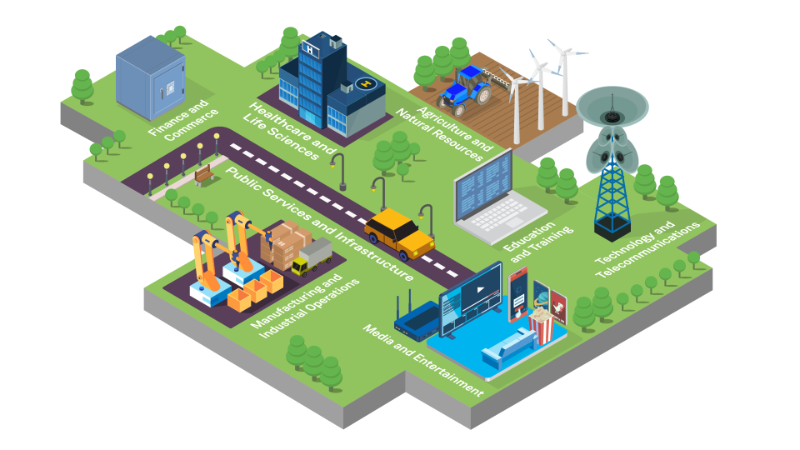
Graduates will have the in-demand skills to operate at entry and intermediate roles on an AI and ML project in a variety of industries and occupational areas, including but not limited to technology implementation, business transformation, management and consulting.
Career positions may include, but are not limited to:
- Business Intelligence Designer
- Business Intelligence Designer
- Robotics Process Analyst
- AI Interaction Designer
- Artificial Intelligence Technologist
- Machine Learning Analyst
- Machine Learning Technologist
- AI System Developer
- Business Transformation Consultant
Post-Graduation Employment
International students who complete an eligible program at Lambton College may be able to apply for a Post-Graduation Work Permit (PGWP) . A PGWP allows eligible graduates to gain Canadian work experience after their studies.
Eligibility and the length of your work permit are determined by Immigration, Refugees and Citizenship Canada (IRCC).
Looking for Support After Graduation?
Your connection with Lambton College continues after graduation. International alumni can access information, resources, and guidance to help navigate employment opportunities and life in Canada after completing their studies.
Co-op
About Co-op
Students in this program have the opportunity to gain valuable work experience by applying classroom learning during co-op experiences.
Learn more about co-op terms and the roles and responsibilities of students and co-op advisors.
More Information
Student Responsibilities

- Course and program schedules may change for each intake.
- Bring a laptop with wireless internet capability.
- Bring official copies of your most recent police clearance, driver’s licence, and vaccination record from your home country, if available.
Technology Requirements
Internet Speed Requirements
For the best online learning experience, we recommend an internet connection with at least 40 Mbps download speed and 10 Mbps upload speed. This will help you attend online classes, join video calls and access online learning tools.
Internet service varies by location, so you will need to choose a provider that is available in your area.
Laptop Requirements
You will need a laptop to access online course materials, software and other learning tools. Your laptop should meet these minimum requirements:
- Intel i5 8th Gen Processor or equivalent
- 8GB of RAM
- 100 GB HDD or more
- Webcam and microphone
- Wi-Fi capable (802.11n/ac 5GHz)
- Windows 11 operating system
Mobile Device
You will also need a smartphone to:
- Access your digital student ID
- Use campus applications and services
Software
Some courses require specific software. Lambton College provides access to Microsoft 365 and other software needed for your studies. Much of your course software is available online and can be accessed on or off campus.
Immigration Regulations & Changes
Immigration regulations are set by the Government of Canada and may change at any time. Students are responsible for understanding and following current immigration requirements while studying and living in Canada.
Lambton College staff cannot provide immigration advice. For current requirements or questions, visit the Immigration, Refugees and Citizenship Canada (IRCC) website or call 1-888-242-2100.