
Bio-Materials & Chemical Laboratory Analysis - Applied Science
Overview
Working in a bio-materials chemistry lab involves exploring the design, synthesis, and characterization of materials that interact with living systems.
The Lambton College Bio-materials & Chemical Laboratory Analysis - Applied Science, Ontario College Graduate Certificate, two-year program provides focused, experiential education to meet the demands of the energy, advanced materials, cannabis and other natural health product industries.
In this program, students study advanced concepts in chemistry, bio-chemistry, biology, physics and mathematics applied to chemical analysis and complex problem solving in a hands-on laboratory environment.
Students conduct tests and develop solutions to problems in analyses of raw materials, products, or environmental samples, synthesize organic or inorganic compounds and prepare reports and technical documentation related to chemical analyses. Within the laboratory environment, graduates implement, coordinate and evaluate quality assurance and quality control procedures, in accordance with international and industry standards and government regulations. The program prepares students to analyze natural products, energy and advanced materials for quality and contribute to research and development.
Admission Requirements
- University degree in science, pharmacy, or engineering with appropriate preparation in Math and Chemistry
The admissions process is competitive and meeting the minimum academic requirements does not guarantee admission.
Lambton College reserves the right to alter information including admission requirements and to cancel a program or course at any time; to change the program curriculum as necessary to meet current competencies or changes in the job market; to change the pathways to third-party certification bodies; or to withdraw an offer of admission both prior to and after its acceptance by an applicant or student because of insufficient applications or registrations or over-acceptance of offers of admission. In the event Lambton College exercises such a right, Lambton College's sole liability will be the return of monies paid by the applicant or student to Lambton College.English Language Requirements
- IELTS of 6.5
- or -
- TOEFL iBT 79
- or -
- Passed Lambton Institute of English placement test
Meeting the minimum English requirements does not guarantee admission. Students with higher English proficiency scores will receive priority in the admission assessment process.
Costs
Technology Requirements
In order to keep pace with the requirements of each and every course in your program, Lambton College requires that each student have access to a laptop while studying at our college.
Courses
Canadian Politics & Government I
Canadian Politics and Government are introduced. Students identify the terms and concepts utilized in the discipline of political science, identifying key geographic and demographic factors; identify the major components of Canada's constitution; outline the evolution of Canadian federalism; identify the functions of political parties and the party system; and identify in detail the election process, outlining the distinctive characteristics of Canada's major parties and the Canadian party system.
Canadian Workplace Health & Safety
In providing an overview of Canadian Labour laws, workplace rules and regulations, and Health and Safety Hazards in the workplace, students gain an understanding of the responsibilities of employers, worker's rights as well as the responsibilities of various organizations in the Canadian labour industry. Awareness and recognition of various health and safety risks arising from a variety of occupations is also covered.
Professional Communications
This course is designed for international students with diplomas or degrees. It focuses on polishing communications skills acquired through one's academic career and workplace experience. Through various business writing and speaking scenarios, students learn Canadian business practices and communication styles, incorporating inclusivity and diversity. Close attention is paid to proper incorporation of the intellectual property of others to ensure academic integrity. Students will practice organized and dynamic speaking and will strive for polished business documents.
Analytical - Separation & Imaging Methods
This course continues the exploration of analytical technology, beginning with the topics of sampling techniques. In this unit the students will learn about strategies for how and where samples are collected, and how they are stored and prepared. In the second unit chromatography in many of its variants is explored. The mechanisms of component separation are presented along with the hardware components of a typical system and how the generated data is analyzed. Some methods for improvement of separation are covered. In the third unit, methods of microscopy are covered, from the many optical methods to electron imaging and atomic force microscopy. In the final unit, a survey of new and potential methods are examined.
Quality Assurance & Control
Quality in the chemical laboratory is about the data being produced being free of error and with well defined and understood limits, consistence and uncertainty. There are national and international standards for quantifying quality. This course will understand the importance of quality in the laboratory, be familiar with the standards that control and define quality, know how to sample to ensure quality through appropriate sampling, method selection, measurement practices and documentation.
Laboratory Techniqes
The student will be introduced to Canadian laboratory techniques, including good laboratory practices for analytical labs (such as appropriate lab record keeping and documentation), laboratory chemical safety (WHMIS/SDS), and lab procedures. Students will learn techniques useful in later areas of the program, such as preparing solutions, proper chemical labelling and storage, and maintaining a laboratory notebook.
Chemical Laboratory Careers in Canada
In this course, students will gain exposure to a variety of career paths in chemical laboratories in diverse industries across Canada through a series of guest lecturers and/or case studies. Students will assess which opportunities are expected to experience growth and they will determine what additional requirements or skills in addition to chemical laboratory skills may be necessary for a chosen profession. Students will investigate an industry in detail to describe the roles, the education and skills required. Students will present their findings to the class.
Statistics for Technology
This course contains descriptive statistics, basic probability, and regression analysis. The course also includes binomial distribution, normal distribution, Student's t-distribution and F-distribution. The statistical ideas of sampling, confidence intervals, and hypothesis testing are introduced. This course also includes elements statistical process control, and system reliability.
Job Search & Success
This course provides student with skills and knowledge to help support their career search and succeed in the workplace. Students align their personal skill set and goals to guide them on their career paths. They will learn how to effectively conduct a job search, build a professional and well-tailored resume and cover letter, and develop and practice interview techniques. Students will also develop their personal brand to help support effective career networking and aid in their job search. Teamwork and collaboration in the workplace are also discussed. Self-reflection is used to inspire insight and support their professional career journey.
Natural Health Products
Interest in the use of natural products in pharmaceutical, nutraceutical, and functional food is growing rapidly. Cannabis legalization in Canada and around the globe has seen substantial growth in the interest of natural health products. In this course, students gain scientific insights in the area of natural health products, and active components of cannabis, ginseng and kombucha. This course focuses on preparing students as skilled employees for cannabis and other natural health product/nutraceutical product manufacturing companies through the integration of scientific concepts well as hands on skills of extraction, downstream processing and refining of active constituents, and product/formulation development of such active ingredients. Students will learn the skills of scientific literature review, laboratory experimentation, sample preparation and analysis, report writing, and presentation.
Reinforced Plastics
Engineered materials systems with the combined benefits of plastics and reinforcement are explored with an emphasis on natural product reinforcement; things like hemp, rice hulls and crystalline cellulose. The recycling benefits and technology are covered in general and as they pertain to these naturally sourced reinforcement materials.
Energy Systems
The petrochemical industry from extraction to processing into energy and materials products is covered in this course. Polymer chemistry and production is explored. Polymers and energy products (for example; bio-diesel and bio-ethanol) from renewable resources is also covered.
Analytical - Physical & Spectrometry Methods
Proposal Writing
A student will work with a mentor to develop a proposal for their applied research project occurring in the next term. Steps in the proposal writing process will be covered.
Design of Experiments
Design of Experiments (DoE) is a highly statistical method of managing studies of complex systems where there is interaction between the variables that control a process. Students will learn the basic terminology of DoE, some of the simple designs and gain some familiarity with some more sophisticated designs. The student will use a software tool like Minitab to design simple experiments, evaluate analysis results and discuss the statistical confidence in those results.
Applied Lab Skills I
In this course the leaning objectives are met through the lens of an applied research-based question. Students will work on a research problem through implementation of procedures and techniques explored in the preceding semesters of the program. Students will be involved in selecting the appropriate techniques, calibrating, and maintaining equipment, and producing valid data for analysis.
Applied Lab Analysis
In this course the learning objectives are met through the lens of an applied research-based question. Students will work to design and analyse experiments to solve and explore an identified applied research problem. Students will be responsible for evaluating the quality of the data, statistical analysis of the data, and considering if the data meets compliance of any relevant industry or government standards.
Scientific Communication & Dissemination I
A student will work with a mentor to plan, communicate and manage the solution to an applied research problem. The emphasis will be on presentation skills, project update creation and tailoring scientific background information for specific audiences.
Work Term (full-time)
Co-operative education provides students with the opportunity to apply classroom learning to the workplace, undertake career sampling and gain valuable work experience that may assist students in leveraging employment after graduation.
WIL Project
Work Integrated Learning (WIL) Project is aimed at enriching students by connecting different program areas of study, cutting across subject-matter lines, and emphasizing unifying concepts. The focus of the WIL Project is to make connections between study and industry by engaging students in relevant and meaningful activities that are connected to and practiced within the professional workplace. WIL Project allows students to enhance and strengthen their employability prospects post-graduation by fine tuning skills and knowledge and meeting the expectations of today's employers. Students are required to attend the scheduled shifts in the WIL office, reporting to the WIL Supervisor. Weekly real-world challenges are presented in the WIL office, designed by industry professionals. In addition to the weekly assigned deliverables, students are also offered professional development sessions, and exposed to industry guest speakers, enhancing their opportunity to develop their professional network.
Contact
Centre for Global Engagement
LAMBTON COLLEGE SARNIA
1457 London Road
Sarnia ON N7S 6K4
After Graduation
Employment Opportunities
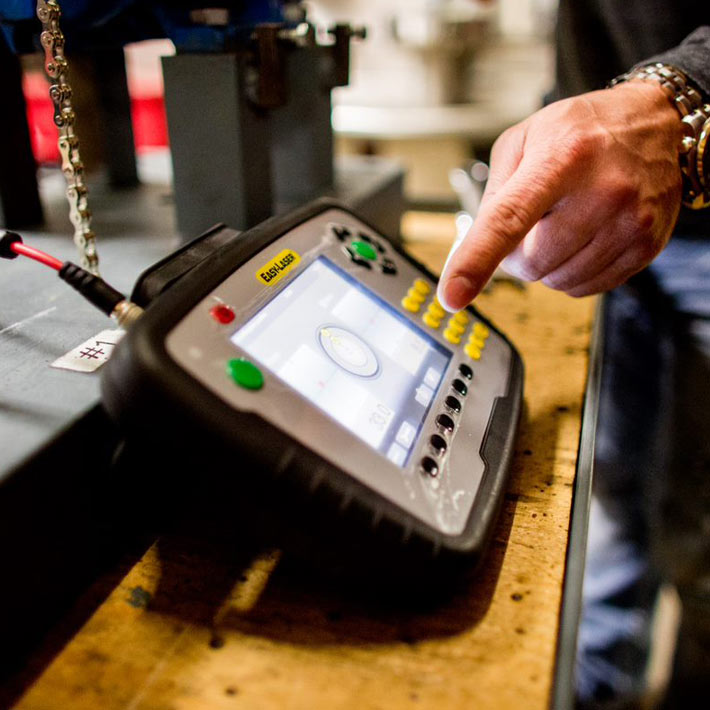
Graduates may find employment as chemical laboratory technologists in a range of settings including: research laboratories, government agencies, educational institutions, and technical sales. They may also work in industries such as, pharmaceuticals, bio-technology, cosmetics, cannabis, natural health products, petroleum, mining, water and wastewater, solid waste, environmental protection, energy, and food science.
More Information
Technology Requirements
It is recommended that you use a Windows laptop for your coursework. While other devices like MacBooks or Chromebooks might work for some tasks, they may not support all the software required for your program. If you're unsure, check with your professors before buying.
Internet Speed Requirements
To get the best experience while learning online, we recommend having an internet connection with at least 40 Mbps download speed and 10 Mbps upload speed. This will help you use video calls, attend online lectures, and access other learning tools smoothly.
Because students live in many different areas, we can't suggest a specific internet provider. You'll need to check with local companies to find one that works best for you.
Laptop Requirements
In order to access the internet and virtually-delivered software and courseware, student laptops should include the following at a minimum. By meeting the following specifications, students will be equipped to access software and courseware on their laptop through the internet:
- Intel i5 8th Gen Processor or equivalent
- 8GB of RAM
- 100 GB HDD or more
- Webcam with a microphone
- Wi-Fi capable (802.11n/ac 5GHz)
- Windows 11 operating system
Mobile Device
Students will require a mobile device (smartphone) for:
- Accessing your digital student ID
- Using campus applications and services
Software
To ensure students are getting the most our of their classroom experience, some software will be required.
Lambton College has made this software easily accessible online. Students can leverage our Microsoft Office 365 software packages and services. In addition, much of the software you require for your courses will be available on demand for use on any device - on or off campus.