

Developmental Services Worker
Overview
Lambton College’s Developmental Services Worker program blends classroom learning with hands-on field placements, preparing graduates to support individuals with developmental disabilities through advocacy, care, and community inclusion.
The Lambton College Developmental Services Worker, Ontario College Diploma program is designed to prepare students with the skills, knowledge, and attitudes necessary to support individuals with developmental and intellectual disabilities in leading meaningful and inclusive lives. Students in the program gain the practical expertise to provide professional, person-centred care and advocacy while promoting dignity, independence, and community participation across a wide range of settings.
Central to the program is a focus on fostering empowerment and self-determination while upholding human rights and advancing social justice. The curriculum emphasizes communication strategies, behaviour supports, health and wellness practices, community integration, and evidence-informed approaches to working with individuals across the lifespan. Additional learning also includes equity, diversity, and inclusion (EDI), which is integrated throughout courses and placements to ensure graduates are equipped to work respectfully with diverse individuals and communities. Students engage in applied learning through classroom instruction, simulations, and participate in two field placements in residential, educational, vocational, and community-based settings, collaborating with families, caregivers, and interdisciplinary teams.
Graduates may find employment in group homes, schools, day programs, residential facilities, employment support services, or community organizations in roles such as developmental services worker, support staff, educational assistant, or community living facilitator. Program graduates may also pursue additional education and apply for admission to advanced diplomas, graduate certificates, or degree programs in related fields such as social work, disability studies, psychology, or related human services fields.
Admission Requirements
O.S.S.D. or equivalent with:
- Grade 12 English C or U
Mature Student Assessment for this program is available in the subject of English for the purpose of demonstrating proficiency in this required admission subject. For all other admission requirements, applicants must complete the required course(s) as listed above. For more information, please contact counselling@lambtoncollege.ca. Review the Mature Student Admission process.
Academic admission requirements can be obtained through Academic Upgrading and the Pre-Programs at Lambton College.
Costs
- Year 1 $4,250.34
- Year 2 $4,250.34
Please Note: These fees apply to the 2026-2027 academic year and are subject to change. Fees do not include books (unless specifically noted), supplies or living costs.
Technology Requirements
In order to keep pace with the requirements of each and every course in your program, Lambton College requires that each student have access to a laptop while studying at our college.
Courses
Supporting People with Developmental Disabilities
This course introduces an overview of developmental disabilities, services and supports. Students will examine key issues such as inclusion, integration, empowerment, advocacy and interdependence; and gain knowledge of what Person-Centred Planning is, how it effectively results in promoting community contribution, and the development of natural, meaningful relationships. The students will also learn how our current systems have evolved by examining earlier eras in history to looking at future plans for the developmental services field in Canada. Ethical issues such as deinstitutionalisation, euthanasia, sterilization, sex and sexuality, parenting and punitive measures will be discussed, as will current laws and legislations which have been put into place to protect people with developmental disabilities.
Developmental Disabilities
In this course, students will research a range of syndromes and associated disabilities, gaining an in-depth understanding of the environmental and genetic factors that contribute to developmental disabilities. Students will explore the signs, symptoms, and potential prevention strategies for these disabilities. Drawing on this knowledge, students will be encouraged to examine and develop approaches to enhance the quality of life for individuals with developmental disabilities, focusing on the support they provide in both personal and professional contexts
Human Growth & Development
Using a developmental psychology lens this course focuses on providing students with an opportunity to improve understanding of development and self in the context of global community. Students will examine the human lifespan from infancy to old age, across physical, cognitive, social and personality contexts. Foundational theories, socio-cultural and historical context, as well as an examination of current issues within Canada, provide the learner with opportunities for critical thinking and a better understanding of the influences on their own development and self-awareness. Applied learning assignments provide learners with the opportunity to demonstrate learning while also adding to their co-curricular record. Global partnership, diversity and equity, epigenetic change, and transgenerational impact are recurring themes throughout.
Health & Wellness 1
This mobile course introduces the learner to a pertinent knowledge of anatomy, physiology, health and wellness. The course will provide the learner with an overview of basic health problems his/her client may experience. Basic techniques and skills will be discussed, demonstrated and practiced.
Augmentative Communication
This course focuses on developing strategies to improve the quality of life for individuals with complex needs, including those with profound intellectual and multiple disabilities. Recognizing that individuals with complex needs often require a multidisciplinary approach to daily living supports the course places particular emphasis on communication strategies. Students will explore various forms of augmentative communication, sensory, and physical supports designed to assist individuals with receptive and expressive communication differences.
General Education Elective
Developing Skills of a Helping Professional
This course is designed to provide the student with the introductory counselling skills of a helping professional. By examining the three-stage skilled-helper model, students will gain an understanding of the interpersonal skills required for effective communication, gain skills in efficient problem-solving and develop competencies for helping clients reach life-enhancing goals.
Health & Wellness 2
This mobile course introduces the learner to continued knowledge of anatomy, physiology, and health and wellness from DSW 1213. This course focuses on the principles and practices of health and wellness as they are applied in the care of the adult and pediatric population. Guided practice in a laboratory setting provides students with an opportunity to apply theory at a beginning level in a simulated workplace environment.
Ethics & Professionalism
This course explores the ethical and professional challenges encountered in fields where limited resources often lead to complex moral dilemmas, particularly in relation to individuals with developmental disabilities. Students will gain a deeper understanding of these issues and reflect on their roles as professionals. The course will also focus on developing personal coping strategies to help students navigate both their professional responsibilities and personal lives.
Dual Diagnosis
This course explores the concept of dual diagnosis, focusing on the co-occurrence of developmental disabilities and mental health conditions. Students will learn how to recognize and effectively support individuals living with a dual diagnosis. The course emphasizes developing the knowledge and skills needed by professionals to understand the complexities of dual diagnosis and provide appropriate support in a variety of settings, ensuring individuals receive holistic care and intervention.
Teaching Strategies
This course introduces students to various assessment processes and tools used for individuals with developmental disabilities, along with the factors that can influence these assessments. Students will explore topics such as creating personal profiles, setting goals, and developing instructional strategies to support individuals with developmental disabilities in their learning. Emphasis will be placed on tailoring assessments and teaching strategies to meet the unique needs of each individual, promoting effective and personalized support.
Workplace Communications
In this course, students write and speak in response to realistic workplace scenarios to build practical communication skills. They produce, revise, and edit written communication geared to the workplace and practice the oral communication and effective listening skills that will help them succeed in professional environments.
General Education Elective
Field Preparation & Seminar 1
In preparation for their first field placement experience students will gain essential knowledge of the services, systems and practices they will encounter. Additionally, the course introduces students to the ethical guidelines ensuring they understand the professional standards necessary for their fieldwork. Students will review Passport to Placement requirements to prepare and ensure eligibility for Field placement 1.
Pharmacology
This course introduces students to the role and responsibilities involved in medication administration, providing a foundational understanding of pharmacology. Students will learn strategies for promoting the safe administration of medications, as well as gain knowledge of major drug classifications and their effects on the human body. Emphasis will be placed on ensuring safe practices while administering medications to individuals with developmental disabilities. A portion of the course will involve lab practice, where students will have the opportunity to apply their learning in the safe administration of medications.
Aging & Grief
This course introduces students to the challenges faced by the aging population of individuals with developmental disabilities, along with the services and support systems available to meet their evolving needs. Students will explore the impact of aging, grief, and the processes of death and dying on individuals with developmental disabilities. The course will focus on how these factors affect the people students will support and provide them with the knowledge and skills to offer compassionate care and assistance during this life stage.
Positive Behaviour Interventions
This course equips students with a range of applied behavioural analysis techniques and strategies for implementing positive interventions to modify behaviour in the least restrictive manner. Students will learn how to develop and apply effective behavioural interventions that respect the dignity and decision-making abilities of individuals with developmental disabilities. Through practical applications, students will gain the skills needed to support individuals in a way that promotes their autonomy while addressing behavioural challenges.
Field Placement 1
In this hands-on field placement component, students gain practical experience by applying the knowledge, skills, and attitudes learned in the classroom to real-world settings. The field placement offers students the opportunity to integrate theoretical learning with hands-on practice, enabling them to develop professional competence. Through these experiences, students will refine their work habits, improve interpersonal communication, and enhance their teamwork skills-all of which are essential for effectively supporting individuals with developmental disabilities.
General Education Elective
Abuse & Neglect
This course focuses on how to support individuals with developmental disabilities who are at a higher risk of abuse, neglect, or victimization. Students will explore strategies to identify signs of abuse or neglect to protect vulnerable populations and demonstrate appropriate responses in these situations. The course includes an in-depth review of current legislation, regulations, and standards of practice related to reporting abuse. Students will also learn about their legal and professional duty to report abuse, with a particular focus on the responsibilities of Developmental Services Workers in these critical situations.
Person-Centred Planning
In this course, students will deepen their understanding of Person-Centred Planning through practical application. They will explore how this approach fosters community presence, participation, and social inclusion for individuals with developmental disabilities. Students will learn how Person-Centred Planning can help build natural and meaningful relationships, empowering individuals to achieve their personal goals and improve their quality of life. Through this knowledge, students will enhance their ability to support and advocate for the individuals they work with, promoting greater autonomy and inclusion in all areas of life.
Small Group Counselling
Building on skills developed in Developing Skills of a Helping Professional (DSW 2033), this course provides students with the opportunity to practice effective communication and facilitation techniques in the context of small group counselling sessions. Students will both facilitate and participate in mock group counselling sessions, gaining hands-on experience in leading discussions, supporting group dynamics, and applying therapeutic strategies in a group setting
Field Seminar 2
Field Placement 2
The second field placement component of the Developmental Services Worker (DSW) Program offers students the opportunity to apply the theory and skills they have learned throughout the program in a real-world setting. This placement serves as the culmination of skills developed in previous terms, allowing students to further refine their professional competence.
Contact
School of Fire Science, Health & Community Services
Program Information
After Graduation
Employment Opportunities
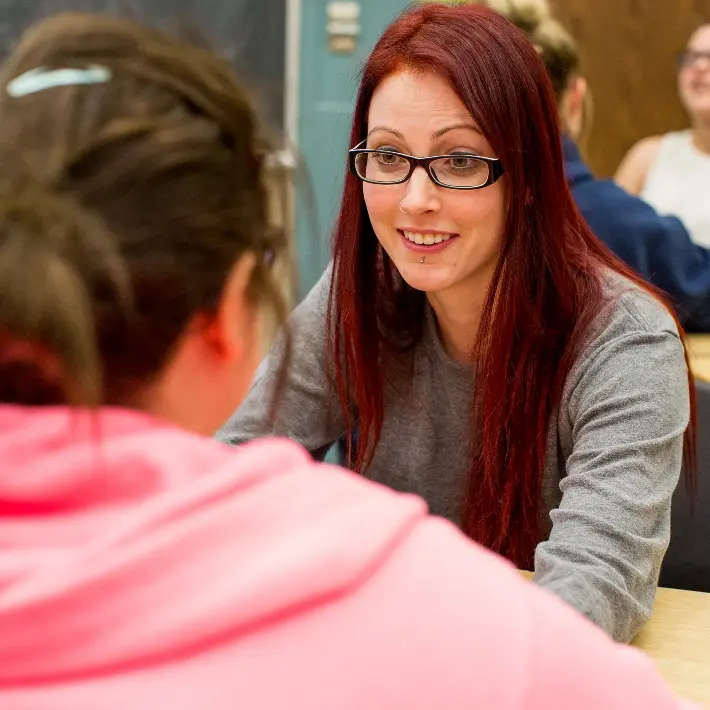
Graduates have diverse and meaningful career opportunities in community agencies, schools, and residential settings. Common roles include developmental services worker, educational assistant, community support worker, and life skills instructor, where graduates help individuals with developmental disabilities build independence, communication, and social inclusion.
Many also pursue specialized paths such as vocational coaching, respite care, or dual diagnosis programs, with opportunities to advance into supervisory or advocacy roles over time. Some graduates continue their studies in fields like social work, psychology, or counselling.
Pathways
Build on your education and complete a college diploma or university degree in Ontario, Canada, or abroad
Want to see more Ontario transfers? Visit ONTransfer.ca.
Placement
- You’ll complete a placement as part of this program, giving you the chance to apply what you learn in a real-world setting. This hands-on experience helps you build practical skills, explore your career interests, and gain experience valued by employers.
Placement Requirements
All placements have requirements that must be completed before you begin. These typically include a Police Record Check with Vulnerable Sector and proof of immunizations.
Placements in our Community
Over the years, Lambton College has developed a strong relationship with the Big Brothers Big Sisters of Sarnia-Lambton. This partnership creates a number of placement opportunities for Lambton College students and it allows the community to access a number of programs that wouldn't exist without this collaboration.
- 15 - 20 students placed in field placements or internships each year
- Representing the Child & Youth Care and Social Service Worker programs
More Information
Technology Requirements
It is recommended that you use a Windows laptop for your coursework. While other devices like MacBooks or Chromebooks might work for some tasks, they may not support all the software required for your program. If you're unsure, check with your professors before buying.
Internet Speed Requirements
To get the best experience while learning online, we recommend having an internet connection with at least 40 Mbps download speed and 10 Mbps upload speed. This will help you use video calls, attend online lectures, and access other learning tools smoothly.
Because students live in many different areas, we can't suggest a specific internet provider. You'll need to check with local companies to find one that works best for you.
Laptop Requirements
In order to access the internet and virtually-delivered software and courseware, student laptops should include the following at a minimum. By meeting the following specifications, students will be equipped to access software and courseware on their laptop through the internet:
- Intel i5 8th Gen Processor or equivalent
- 8GB of RAM
- 100 GB HDD or more
- Webcam with a microphone
- Wi-Fi capable (802.11n/ac 5GHz)
- Windows 11 operating system
Mobile Device
Students will require a mobile device (smartphone) for:
- Accessing your digital student ID
- Using campus applications and services
Software
To ensure students are getting the most our of their classroom experience, some software will be required.
Lambton College has made this software easily accessible online. Students can leverage our Microsoft Office 365 software packages and services. In addition, much of the software you require for your courses will be available on demand for use on any device - on or off campus.